Corporate calendars are crowded, and attention is harder to earn than it used to be. The corporate events that feel valuable now are not always the biggest or most polished. They are the ones with a clear point of view, a useful agenda and a reason for people to stay mentally present.
That starts before the format is chosen. A breakfast briefing, leadership forum, industry summit or client experience can all work, but only when the idea behind it is strong enough to guide the room. Without that, even good production can feel like more noise.
- Key takeaways
- Why do many corporate events struggle to hold attention
- Start with a theme, not a format
- Make the agenda feel useful in the room
- Build audience engagement into the experience
- Connect the idea to the business event context
- What makes a corporate event worth attending now
- Frequently Asked Questions: corporate event ideas that cut through the noise
Why do many corporate events struggle to hold attention
People do not arrive at corporate events with empty minds. They arrive between deadlines, meetings, inboxes and travel. Many are also carrying a quiet question: will this be worth the time away from work?
That question changes the standard. A familiar format is not enough by itself. A polished stage, a networking break and a packed agenda may all be useful, but only when they serve a clear purpose. Without that, the event can start to feel like another obligation in an already full calendar.
Attention drops when the experience feels interchangeable. The topic might be relevant, yet the room still feels flat because the structure gives people little reason to lean in. Long sessions blur together. Panels repeat safe points. Networking is left to chance. The audience becomes present in the room, but absent from the experience.
The stronger approach is not to add more. It is to make the event easier to understand, easier to enter and easier to remember. That usually starts with one sharp idea that gives the whole experience its shape.
Start with a theme, not a format
A common mistake is to begin with the shape of the event too early. Breakfast panel. Half-day forum. Cocktail briefing. Immersive showcase. Those choices matter, but they should come after the event has a point of view.
A theme gives the experience a reason to exist. It tells the audience what the event is really asking, challenging or helping them understand. It also gives the planning team a filter for decisions. Which sessions belong? Which moments feel unnecessary? Where should the energy be lifted? What should people still be thinking about the next day?
That is where stronger corporate event ideas usually begin. Not with novelty for its own sake, but with a clear theme that can hold the content, room design, guest journey and conversation together.
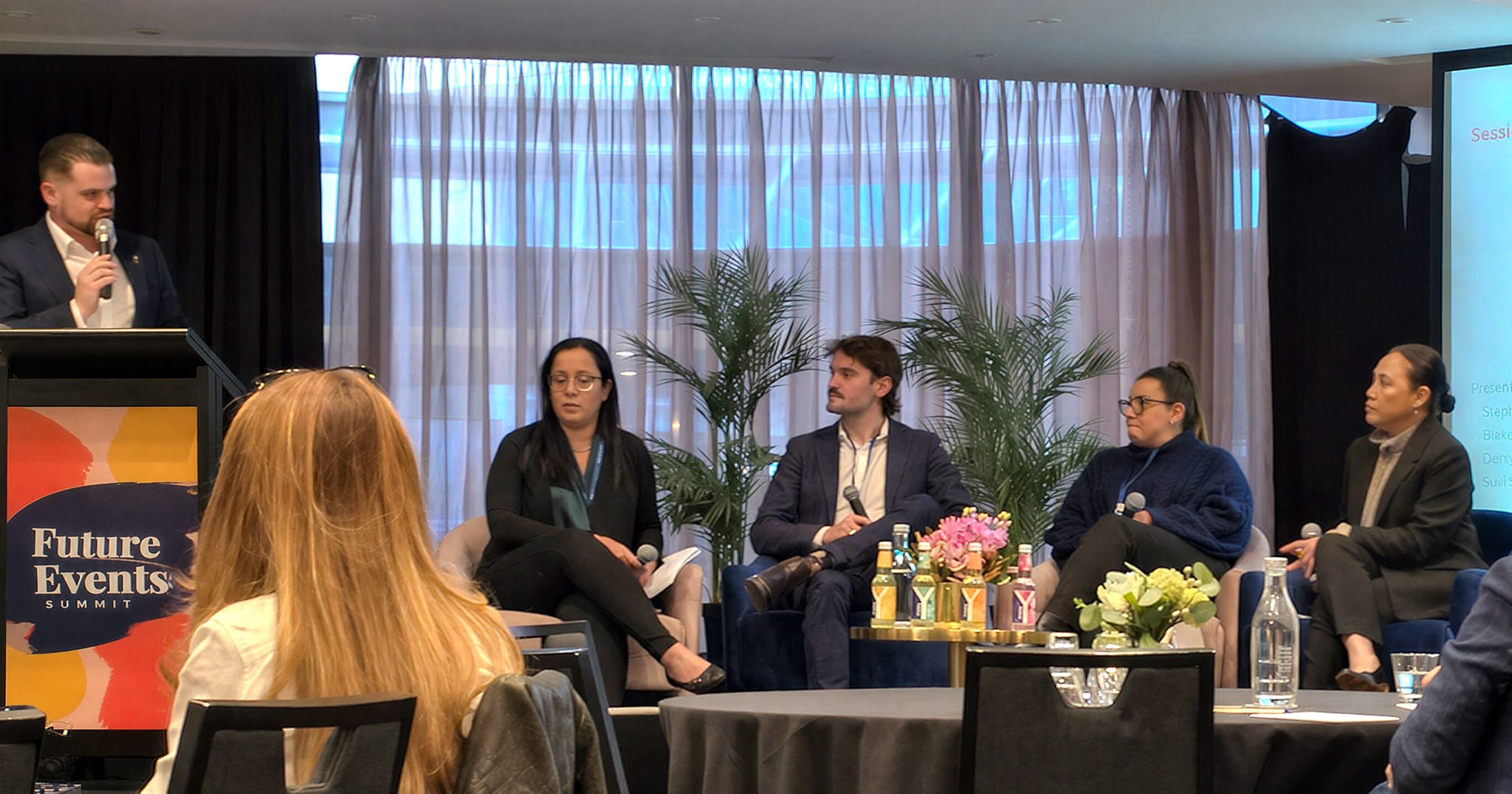
For the Future of Events Summit, that theme-led approach matters because the audience is not attending for a passive update. They are looking for useful thinking, sharper context and ideas they can take back into their own events, teams and planning conversations.
Make the agenda feel useful in the room
An event agenda should do more than fill time. It should help the audience understand why they are there, where the conversation is going and what they can take from each part of the experience.
That does not always mean more content. In many corporate events, the sharper decision is to reduce the number of sessions and give each one a clearer job. A panel might be useful for debate, but weak for practical instruction. A keynote can set direction, but it should not carry the whole room on its own. A workshop can create depth, but only when the audience knows what they are expected to contribute.
The agenda becomes stronger when the rhythm is intentional. There needs to be enough pace to hold attention, enough space for people to think and enough contrast between formats so the day does not flatten out.
Useful agendas also respect the audience’s working reality. People want ideas they can apply, questions they can bring back to their team and language that helps them explain why a direction matters. When the agenda gives them that, the event starts to feel less like a scheduled commitment and more like time well spent.
Build audience engagement into the experience
Audience engagement is often treated as something added after the content is set. A live poll here, a Q&A there, and a networking activity if the schedule allows. Those elements can help, but they rarely change the feel of the event when they are only layered on at the end.
The better question is what kind of attention the event is asking for. Some moments need focus. Some need movement. Some need peer discussion. Some need space for people to test an idea against their own role, industry or team. Strong live experiences recognise that audiences do not engage in one fixed way.
This is also where event design needs to stay practical. Useful engagement does not need to be loud or complicated. It may be a sharper prompt after a session, a shorter panel with better moderation, a hosted conversation between people facing similar challenges or a digital layer that helps people respond without interrupting the room.
Recent event industry insights continue to point towards personalisation, smarter event technology and more intentional attendee experiences. The point is not to use every new tool. It is to choose the moments that help people participate with purpose, rather than sit through another program built around passive attention.
Connect the idea to the business event context
The strongest ideas still need to make sense inside the business event environment. A corporate event is not only competing with other events. It is competing with the work people need to leave behind to attend.
That is why the idea cannot sit apart from the audience’s professional context. A leadership event may need to create alignment around a decision. A client experience may need to build trust without feeling like a sales presentation. An industry program may need to help people understand what is changing, what is useful and what deserves more attention.
Theme-led thinking helps here because it connects the creative layer to a business reason. The theme can shape the room, but it should also shape the conversation. It gives the event a sharper centre and helps every session, break, prompt and hosted moment support the same purpose.
The measure is not only whether people enjoyed the day. It is whether they left with clearer thinking, useful language, stronger connections or a better way to approach the decisions in front of them.
What makes a corporate event worth attending now
The corporate events that cut through are rarely built around a single impressive feature. They work because the idea, agenda, audience role and business reason all point in the same direction.
That is what makes theme-led thinking useful. It gives event teams a way to judge decisions before they become expensive, crowded or difficult to explain. If a format does not support the theme, it can be questioned. If a session does not move the conversation forward, it can be sharpened. If an engagement moment feels decorative, it can be replaced with something more useful.
Corporate audiences are not short on invitations. They are short on time, attention and tolerance for experiences that feel familiar without being useful.
A strong event does not need to shout louder. It needs to give people a reason to be in the room, a reason to participate and something clear enough to carry back into their own work.
Frequently Asked Questions: corporate event ideas that cut through the noise
Corporate events are changing because audiences are changing. The strongest experiences now need clearer ideas, sharper agendas and more useful reasons for people to be in the room. Explore the conversations shaping what comes next at Future of Events Summit. Book your ticket and continue the conversation.
- About the Author
- Latest Posts

Welcome to the official insights and editorial platform of the Future of Events Summit, a premium industry forum exploring the future of events, audience engagement, experience design and live brand experiences. Created by the team behind Pink Caviar Events, the platform shares industry perspectives, emerging trends, strategic conversations and practical insights for professionals working across events, marketing, communications and business experiences.