
Predictions about the events industry are easy to find. New technology, changing audience expectations, sustainability pressures and evolving business priorities all create a steady stream of ideas about what comes next. But predictions rarely answer the harder question facing event professionals: which changes are worth acting on, and which are simply part of the noise?
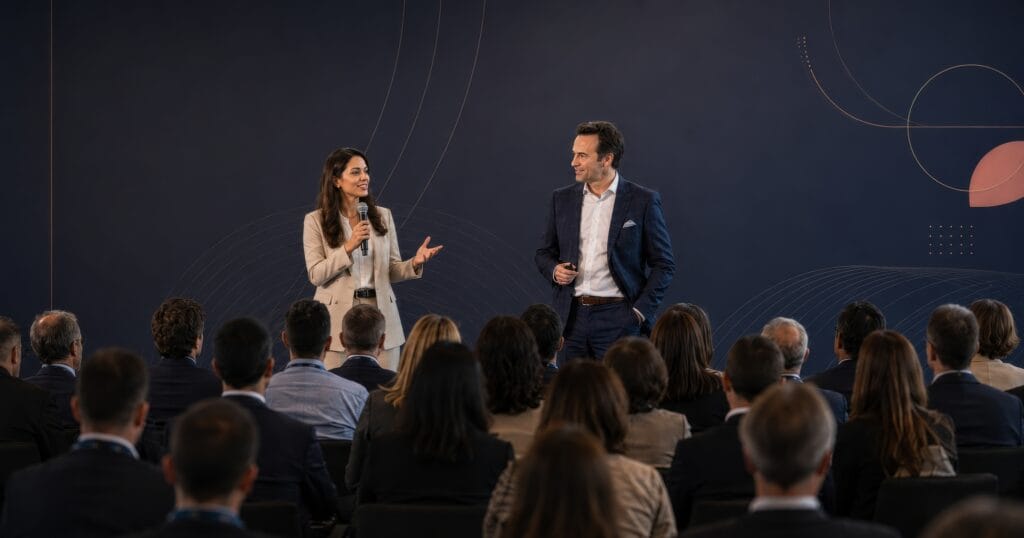
That is where a shared industry forum becomes useful. The first Future of Events Summit creates space for event professionals, marketers, business leaders and industry partners to compare perspectives, question assumptions and explore what change means in practice. No trend, speaker or forecast can decide the industry’s direction alone. It will take shape through the choices people make, the lessons they share and the questions they are prepared to examine together.
- Predictions Are Easy. Useful Questions Are Harder
- What Event Industry Trends Can and Cannot Tell Us
- Better Event Decisions Need Different Perspectives
- Industry Conversation Should Lead to Practical Action
- The Future of Events Will Be Shaped Together
- Frequently Asked Questions: Event industry trends and the future of events
Predictions Are Easy. Useful Questions Are Harder
A forecast can make uncertainty feel manageable. It suggests that the next important technology, format or audience expectation can be identified early, placed on a roadmap and treated as the direction the industry will follow. Predictions give change a sense of order. They suggest that the next important technology, format or audience expectation can be identified early, placed on a roadmap and treated as the direction the industry will follow.
Real event decisions are rarely that simple. An idea may sound convincing on a conference stage but still be difficult to fund, explain internally or deliver well. A new tool may attract attention without improving the experience. A popular format may suit one audience and frustrate another. Even a well-supported trend can create more work than value when it is applied without enough scrutiny.
The harder work starts with better questions. What problem is the idea solving? Who benefits from it? What will it change for the people in the room? Can the team deliver it to the standard the audience expects? Event professionals do not need certainty about every development. They need enough clarity to decide what deserves attention now, what requires further testing and what can be left alone.
What Event Industry Trends Can and Cannot Tell Us
Trends can be useful because they show where attention is moving. They may reveal changing audience expectations, new delivery methods, emerging technology or stronger pressure around accessibility, sustainability and measurable value. They help event professionals notice what is gaining momentum.
The value of event industry trends is not that they tell every organiser what to do next. A trend is a signal, not an instruction. The same idea may be valuable for a national conference, unnecessary for an internal leadership event and impractical for a small association with limited resources. Context changes the decision.
Before a trend becomes part of an event plan, it should pass a more practical test:
- Does it solve a real audience or organisational need?
- Does it support the event’s purpose?
- Can the team deliver it properly?
- What useful outcome should change as a result?
These questions create distance between noticing a trend and acting on it. That distance matters. Without it, teams can spend time and budget introducing something new while leaving the underlying audience experience unchanged.
A stronger response may be to test the idea on a smaller scale, adapt it to suit the event or decide that it does not belong in the program at all. That is not resistance to change. It is professional judgement. Trends can broaden the options available to event teams, but they cannot replace the responsibility to choose what is relevant, realistic and worth delivering well.
Better Event Decisions Need Different Perspectives
Consider a decision about introducing a new networking format. An organiser may see a chance to improve participation. A venue may focus on space, timing and movement. A speaker may be concerned about how the format affects the program. A supplier may identify delivery risks that are not obvious during early planning. Senior leaders may want to know whether the change supports the event’s purpose and justifies the additional cost.
None of those perspectives is complete on its own. Together, they expose the trade-offs behind what first appeared to be a straightforward idea.
This is why different professional perspectives matter when the industry discusses what comes next. They help separate assumptions from practical experience. One person may have seen an idea work well in a particular setting, while another understands why it failed with a different audience, budget or event format. That contrast can reveal the conditions required for an idea to succeed.
Useful discussion does not require everyone to agree. It requires people to explain what they have observed, what shaped the outcome and what others should consider before making a similar decision. The goal is not to find one answer that applies to every event. It is to give professionals a clearer view of the options, risks and consequences before they choose their own direction.
Industry Conversation Should Lead to Practical Action
A useful industry conversation does more than identify what is changing. It helps people work out what that change means for the events they are responsible for, the audiences they serve and the organisations they need to answer to.
That requires more than polished opinions. It requires specific examples, candid disagreement and enough detail to understand why an idea worked in one setting but not another. The most valuable industry insights often come from the conditions around the decision: the audience, budget, timing, internal support and delivery capability.
Future of Events Summit is designed to create that kind of exchange. Its summit agenda brings together practical sessions, panels and professional conversations that move beyond broad forecasts. The aim is not to present one agreed version of the future. It is to give people stronger questions, wider context and ideas they can assess against their own work.
The real test comes afterwards. A conversation has value when someone returns to their team with a clearer recommendation, challenges an assumption in the brief or decides to test an idea before committing to it at scale. Discussion should not end with agreement. It should improve what happens next.
The Future of Events Will Be Shaped Together
The future of events will not arrive as one clear answer. It will emerge through hundreds of smaller decisions about audience needs, technology, access, sustainability, content, connection and value.
Those decisions improve when people are willing to compare experiences, question familiar approaches and speak honestly about what worked, what failed and what changed as a result. Progress depends on more than enthusiasm for new ideas. It depends on professional judgement and the confidence to adapt, test or reject those ideas when the context demands it.
Industry progress is rarely shaped by one voice. It develops when event professionals look beyond their immediate roles, listen to experiences that differ from their own and bring those insights back to the realities of delivery. No single person, organisation or prediction will define what comes next. The direction will be shaped by the people prepared to contribute, listen and make better decisions together. together.
Frequently Asked Questions: Event industry trends and the future of events
Explore the ideas behind event industry trends further at the Future of Events Summit, where event professionals, marketers and business leaders will come together to examine what makes live experiences more meaningful, measurable and memorable. Book your ticket and continue the conversation.
- About the Author
- Latest Posts

Welcome to the official insights and editorial platform of the Future of Events Summit, a premium industry forum exploring the future of events, audience engagement, experience design and live brand experiences. Created by the team behind Pink Caviar Events, the platform shares industry perspectives, emerging trends, strategic conversations and practical insights for professionals working across events, marketing, communications and business experiences.