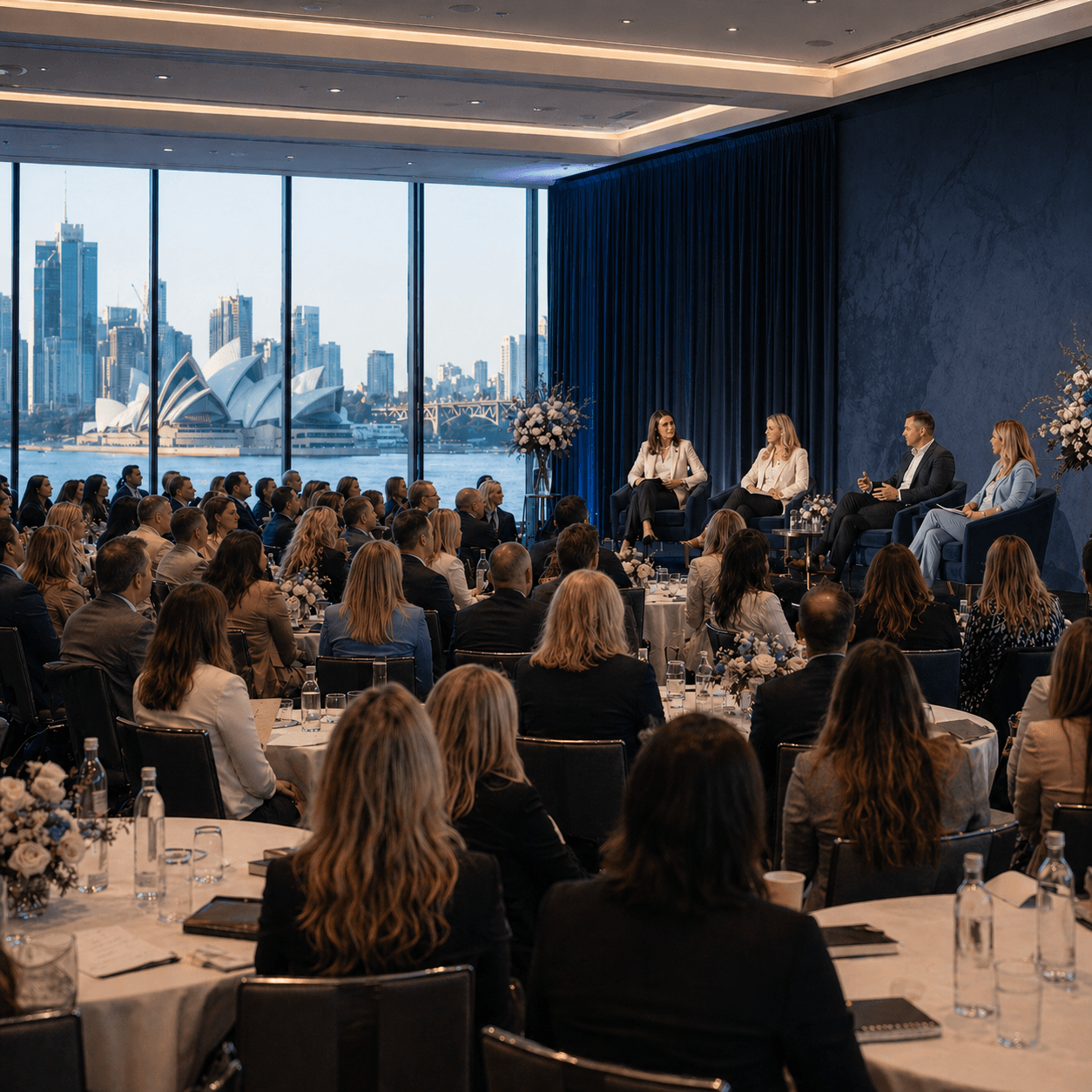
The first Future of Events Summit opened a conversation about where the industry is heading and, just as importantly, what event professionals are already questioning. Across the day, several themes kept intersecting: the need to design experiences with greater intention, the growing role of AI, changing expectations around value and measurement, and the pressure to keep improving how events are delivered for both audiences and the people behind them.
What emerged was not a single prediction about the future. It was a series of connected signals. Attendee responses and the conversations across the day pointed to an industry thinking more critically about what makes an event worth attending, where technology genuinely adds value, how success should be measured and which long-held assumptions are ready to be challenged. Those patterns give us a useful starting point for exploring the conversations shaping what comes next.
- What the room told us matters next
- Experience design is becoming a strategic decision
- Memorable brands are being experienced, not just seen
- AI is moving from experimentation to practical use
- Connection still carries measurable value
- Event success is being defined more broadly
- Useful ideas need somewhere to go after the event
- Sustainable events also require sustainable people
- The conversations shaping tomorrow are only beginning
- Frequently Asked Questions: the future of events and what’s shaping tomorrow
What the room told us matters next
The clearest pattern from the opening attendee poll was that people were looking beyond technology on its own. Event design and attendee engagement emerged as the strongest priority at 50%, ahead of AI and event technology at 40%. That ten-point gap matters. Even with rapid advances in technology, the quality of the experience itself remained front of mind.
If the events industry could change one thing in the next 12 months, where should we focus first?
35.4% Event design & attendee engagement
28.0% AI & event technology
12.2% Human connection & belonging
11.0% Measurement & commercial outcomes
7.3% Workforce wellbeing & better ways of working
6.1% Sustainability & accessibility
The rest of the responses widened the picture. Human connection and belonging, measurement and commercial outcomes, workforce wellbeing, sustainability and accessibility all registered as areas needing attention. None reached the same level as experience design or technology, but together they point to a broader challenge: improving events now means thinking about what audiences experience, what organisations gain from them and how the work is delivered.
Because attendees could choose more than one priority, the result is more useful as a pattern than a winner-takes-all ranking. Experience and technology clearly sat at the front of the conversation, but they did not sit there in isolation.
That pattern also reflected the shape of the Summit program. Conversations moved between designing moments that matter, creating corporate experiences that cut through, building sustainable event strategies, questioning accepted industry practices and exploring where AI can genuinely help. Different sessions approached the future from different directions, but the underlying question was similar: what should event professionals be paying closer attention to now?
Experience design is becoming a strategic decision
If one theme sat consistently underneath the day, it was that a well-run event is no longer enough on its own. Audiences have more choice about where they spend their time, and that raises the standard for what an event needs to give back. The fact that event design and attendee engagement led the priority polling reinforces that shift.
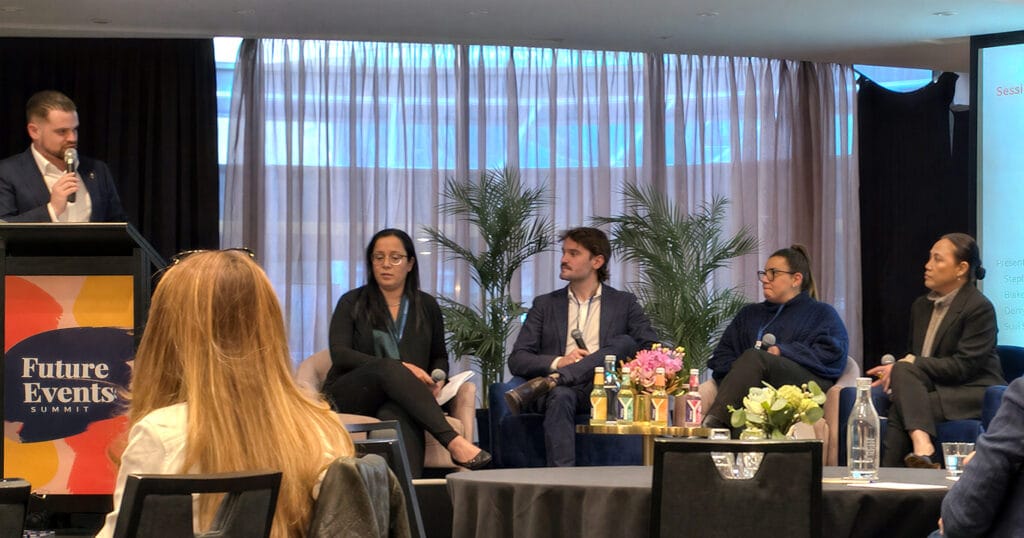
The opening plenary, The Future of Event Design & Promotion: Designing Moments That Matter, explored this from several angles, including concept development, venue strategy, promotion, audience engagement and what remains after the event itself. The later discussion on corporate experiences added another layer: standing out is not simply about adding more activity. It starts with understanding who the audience is, what they need from the experience and what the organisation needs the event to achieve. Those themes ran throughout the wider Summit agenda.
That changes the role of event design. It becomes less about how an event looks in isolation and more about the decisions that shape how people move through it, what holds their attention, where connection happens and what they take away. Program structure, venue choice, content, pacing, technology and brand presence all contribute to that experience.
The practical consequence is that design decisions need to happen earlier and with more purpose. Before deciding what to add, event teams need to be clear about what the audience should experience and why it matters. When that thinking leads the process, engagement becomes part of the strategy rather than something organisers try to create once the program is already built.
Memorable brands are being experienced, not just seen
Brand experience emerged as another recurring thread through the Summit. Lorraine Murphy’s keynote, Branding Beyond the Logo: How to Make Your Presence Unforgettable, resonated with attendees through its focus on clarity, audience understanding and creating a brand people can genuinely feel and remember.
That matters for events because a brand is rarely experienced through one element in isolation. Signage, staging and visual identity contribute, but so do the way people are welcomed, the relevance of the content, the environment created around them and whether the experience feels coherent from beginning to end. An event gives audiences a concentrated experience of what an organisation stands for.
The wider pattern points towards a more useful question for event teams: not simply, “How do we make the brand visible?” but “What should people understand or remember about the brand because they were here?” That shifts branding from a layer added to an event into something that influences the experience itself.
For organisations investing in events, that distinction becomes increasingly important. A memorable experience does not need to be louder or more elaborate. It needs enough clarity and consistency for the audience to recognise what mattered, why it was relevant to them and what they will carry with them afterwards.
AI is moving from experimentation to practical use
The conversation around AI felt noticeably different from the early question of whether event professionals would use it at all. Attendee responses showed that 97% were already using AI either regularly or occasionally. Adoption, at least among those responding at the Summit, was no longer the main issue.
The more revealing pattern was where people believed AI could actually help. Reporting, summaries and post-event insights emerged as the strongest opportunity, selected by 53%. Event planning and timelines followed at 33%, while marketing content received no selections. The emphasis was less on generating more material and more on reducing administrative load, organising information and making better use of what an event produces.
AI is already part of the workflow
The stronger question is becoming where AI adds value and what still requires human judgement.
Already using AI regularly or occasionally
Reporting, summaries & post-event insights seen as the biggest time-saving opportunity
The leading concerns were closely matched
Accuracy & quality
35%
Generic or off-brand output
32%
Privacy & confidentiality
29%
Attendee responses show high adoption alongside a more considered conversation about where AI adds value and how it should be used.
The AI as Your Co-Creator workshop added practical context, exploring ideation, research, content development, workflow efficiency and insight generation. But efficiency alone will not determine how AI develops within events. The quality of the outcome still depends on how the technology is used.
When attendees were asked about their biggest concerns, the responses were closely divided. Accuracy and quality led at 35%, followed by generic or off-brand output at 32% and privacy and confidentiality at 29%. Prompting barely registered. The strongest concerns were not about learning how to access AI. They were about whether the output could be trusted, whether it represented the organisation properly and what information should be shared with it.
This is where the conversation moves from adoption to judgement. A summary still needs context. An insight still needs someone to decide whether it is meaningful. An automated workflow still needs boundaries and an understanding of what should happen when circumstances change.
The next phase of AI in events may therefore be shaped less by who has access to the technology and more by where teams choose to use it, what they continue to own themselves and what safeguards sit around the process.
Connection still carries measurable value
Alongside conversations about AI, event design and changing delivery models, the Summit also created repeated opportunities for professional connection. Networking was built into morning tea, lunch, the Innovation Lab, afternoon tea and closing drinks, giving attendees space to continue conversations beyond the formal program. Feedback received so far has also reinforced the value of both professional connection and the expertise shared across the day.
Connection can easily be treated as something that happens around the formal program. In practice, those conversations help people compare approaches, test an idea against someone else’s experience and recognise challenges shared across different parts of the industry.
Content may introduce an idea, but professional exchange often helps determine what that idea means in practice. That gives event organisers another design consideration: not simply how much networking time to provide, but how the program, environment and format can make those interactions more useful.
Technology can support that process. It does not need to compete with it.
Event success is being defined more broadly
One of the clearest signs of change came through the myth-busting conversation. Attendees challenged familiar assumptions such as equating attendance with success, assuming more sessions automatically create more value, or treating ROI as the only meaningful measure of an event.
Rethinking what event success looks like
The myth-busting conversation challenged familiar measures and opened broader questions about what an event is actually there to achieve.
FAMILIAR ASSUMPTION
Attendance equals success
BROADER QUESTION
What did the event actually change or enable?
FAMILIAR ASSUMPTION
More sessions create more value
BROADER QUESTION
Was the content relevant, useful and worth the audience’s time?
FAMILIAR ASSUMPTION
ROI tells the whole story
BROADER QUESTION
Which outcomes actually matter for this event?
FAMILIAR ASSUMPTION
We’ve always done it this way
BROADER QUESTION
Is the approach still serving the audience and the outcome?
These responses do not reject traditional measures. They point to a broader conversation about choosing measures that match the purpose of the event.
Attendance, revenue and commercial return still matter when they relate to the purpose of the event. A conference built around professional learning may also need to consider relevance, application and what happens after attendees leave. A corporate experience may place greater weight on relationships, brand perception or stakeholder engagement. A launch may need to measure reach, response and subsequent action.
Attendee feedback received so far also points to a broader picture of value, including professional connection, speaker expertise, practical ideas and relevant content. These signals may require different measures, but they still tell organisers something important about whether an experience delivered what people came for.
A useful starting question is: what should be different because this event happened?
Once that is clear, the measures become easier to choose. Attendance may be important, but so might session engagement, follow-up action, quality of conversations, brand recall, leads generated, knowledge applied or stakeholder confidence.
For the future of events, the shift is not away from measurement. It is towards being more deliberate about what success means before deciding which numbers will prove it.
Useful ideas need somewhere to go after the event
Practical application was another theme that carried through the Summit. Across sessions on branding, digital strategy, AI, leadership and sustainable event delivery, the conversation repeatedly moved from the idea itself to what event professionals could do with it.
Feedback received so far has reinforced that point. The value was not simply in hearing something interesting, but in leaving with a clearer way to think, work or make decisions. Professional learning becomes more useful when an idea can travel back into an attendee’s own organisation.
For experienced professionals, relevance is often tested quickly. Is there something here worth adapting, discussing with the team or trying in the next piece of work? Across the perspectives shared by the Summit speakers, practical application sat alongside the bigger strategic conversations.
Future-facing content does not need to choose between ambitious ideas and useful ones. The strongest sessions can do both: challenge an established way of thinking and give people somewhere practical to take that thinking next.
Sustainable events also require sustainable people
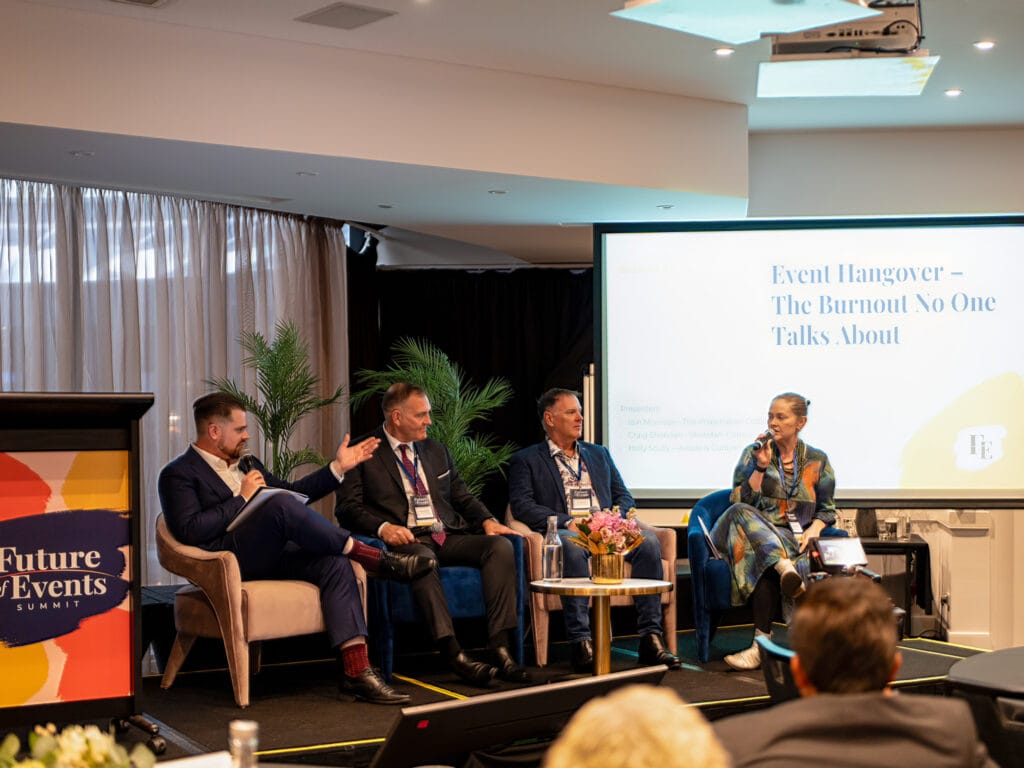
As expectations around events continue to rise, sustainability also needs to include the people responsible for delivering them. The Event Hangover: The Burnout No One Talks About panel brought leadership, culture and operational expectations into that conversation, and the importance of recognising burnout has also come through in attendee feedback received so far.
Better events cannot depend indefinitely on teams absorbing more complexity. New technology, tighter timelines, ambitious programs and rising audience expectations can all add value, but they also change the demands placed on the people responsible for making an event work.
The leadership masterclass added another dimension. How leaders communicate, set expectations and respond under pressure shapes the environment in which teams operate. Sustainable performance is not solely a question of individual resilience. Planning, decision-making, role clarity and realistic expectations all influence how well a team can perform over time.
Innovation should therefore be considered alongside capacity. Smarter tools and stronger processes have value when they remove unnecessary friction, improve visibility or help teams make better decisions. As event experiences become more sophisticated, the way the industry supports the people creating them needs to develop as well.
The conversations shaping tomorrow are only beginning
The first Future of Events Summit did not point to one answer about where the industry is heading. Instead, it surfaced connected conversations around experience design, AI, measurement, professional connection, sustainable delivery and the value of ideas that can be carried back into real work.
Those patterns show an industry moving beyond simple trend watching. Event professionals are asking harder questions about what makes an experience worthwhile, where technology genuinely helps, how success should be measured and how teams can keep delivering at a high level as expectations continue to rise.
The opportunity now is to take those conversations further. Emerging technologies, new formats, smarter production and logistics, evolving guest experiences and ideas from around the world all create new territory to explore. The Summit opened the conversation. What comes next is the chance to keep testing, questioning and expanding what tomorrow’s events could become.
Frequently Asked Questions: the future of events and what’s shaping tomorrow
The conversation continues at the Future of Events Summit, bringing event professionals, marketers and business leaders together to explore what is changing, what matters next and how the industry can keep moving forward.. Book your ticket and continue the conversation.
- About the Author
- Latest Posts

Welcome to the official insights and editorial platform of the Future of Events Summit, a premium industry forum exploring the future of events, audience engagement, experience design and live brand experiences. Created by the team behind Pink Caviar Events, the platform shares industry perspectives, emerging trends, strategic conversations and practical insights for professionals working across events, marketing, communications and business experiences.