
The logo might be on the lanyard, the lectern and every holding slide. That still does not tell guests whether the event feels organised, generous with their time or worth talking about after they leave.
Brand experience at an event is created through what people move through, hear, wait for, solve, share and remember. Event branding gives the room a visual identity, but the real test is whether the room, content, service, speaker flow and follow-up all point to the same idea.
Why event branding is only one part of the experience
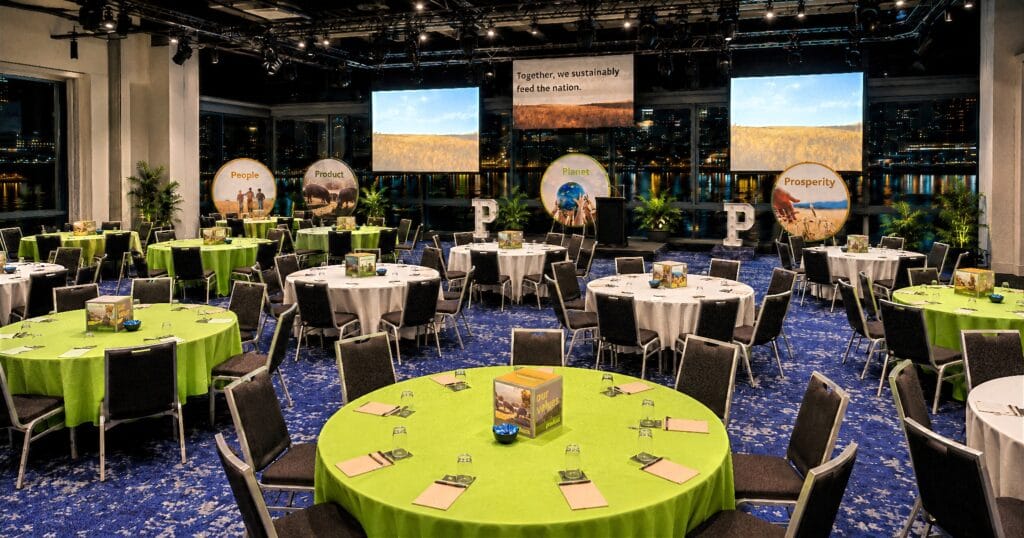
Event branding is useful because it gives people something to recognise. It tells them whose room they are in. The colours, signage, screen graphics, name badges and printed material all help the event feel owned rather than assembled from spare parts.
But guests do not experience those things in isolation.
They see the welcome desk before they see the keynote. They feel the queue before they notice the stage design. They decide whether the room feels calm or confusing while they are still finding their seat. A beautiful visual identity can sit on top of an event that feels difficult to move through.
That is why brand experience has to be planned beyond the visible layer. Event branding can make the event look coherent. The rest of the experience decides whether that coherence feels true.
The room sets the first brand expectation
A strong brand experience can start with something as ordinary as the door line. If guests arrive and immediately hit a slow queue, a confusing check-in point or a room that feels too tight, the brand has already said something.
The room makes promises before the host does. Wide aisles can make the event feel calm. Clear sightlines tell people they are meant to focus. Warm lighting can soften a formal program. Poor sound can make a strong speaker feel less convincing.
This is why room design should not be treated as the final styling pass. It affects behaviour. People move differently when the space is easy to read. They listen differently when the room supports attention. They network differently when there is a natural pause.
None of that requires excess. It requires choices that match the audience, the content and the kind of experience the brand wants people to carry home.
Brand is felt through the audience journey
A guest does not separate the event into “brand”, “operations” and “content”. They experience it as one continuous run of moments. The reminder email. The walk from the lift to the registration desk. The first person who says hello. The pause between sessions when everyone is looking for coffee.
This is where a brand can become more believable, or less.
Useful touchpoints include:
- The invitation and how clearly it sets expectations
- Arrival instructions that reduce guesswork
- A welcome that feels prepared, not scripted
- Breaks that match the energy of the room
- Session changes that do not feel rushed
- Staff who understand the tone, not only the task
- Follow-up that reflects what actually happened
The point is not to make every touchpoint large or theatrical. Often, it is the quieter decisions that do the work. A sign is placed before the confusion point. A break long enough for a real conversation. A staff member who knows where the accessible entry is without needing to ask someone else.
Those details tell people whether the host has thought about the event from the audience’s side. That is a brand signal, even when there is no logo in sight.
Speaker flow and content carry brand meaning
Content is one of the fastest ways an event shows its standards. The agenda tells the audience what the host thinks is worth attention. It also shows whether the event has a real point of view or whether the program has been padded to fill the day.
Speaker flow is not only about who appears on stage. It is about how ideas are sequenced. A keynote can open a question. A panel can test it. A workshop can make it practical. A poorly ordered program does the opposite: it makes good speakers work harder because the room cannot see how the pieces fit.
The speakers also carry the event’s tone. A strong speaker list does not need every person to sound the same, but it does need a clear thread. At the Future of Events Summit, that thread should help the audience feel like they are part of a live professional conversation, not watching separate presentations share a stage.
Service moments can build or weaken brand trust
Service is easy to underestimate because, when it works, it almost disappears. Guests ask a question and get an answer. A dietary request is handled without a scene. A late arrival is guided to the right door without interrupting the session.
That quiet competence changes how the brand feels.
The reverse is just as visible. A guest who is sent to the wrong place, a sponsor who cannot find their contact, or a speaker left waiting without direction. None of those moments may appear in the event photos, but they sit in the memory of the people involved.
Service does not need to feel overly formal. It needs to feel briefed, calm and aware of the room. That is often enough to turn a practical task into a brand-building moment.
Follow-up extends the live brand experience
The room may empty at 5 pm, but the event is not finished in the audience’s mind. People talk about the session on the way back to the office. They send a note to a colleague. They save a quote. They look for the speaker’s slides because one point was useful enough to revisit.
That is the window that many events waste.
A generic thank-you email can flatten a strong live moment. A better follow-up feels like it came from the event people actually attended. It might share the sharpest session takeaway, answer a question that came up in the room, send a useful recording or invite the audience into the next conversation.
As brand experience becomes a more powerful marketing lever, follow-up should not be treated as admin. It is where the event decides what happens next: memory, action, community, or silence.
Events make brand experience visible
Events are useful because they make the brand harder to hide.
A campaign can control the message. A visual identity can control the look. A live room tests both. People notice the gap between what the brand says and what the event asks them to put up with: the unclear arrival, the rushed panel, the room that does not support the conversation, the follow-up that feels like it could have been sent after any event.
That does not mean every live experience needs to be highly produced. It means the pieces need to make sense together. The room, program, service and follow-up should all feel as though someone has made choices on purpose.
For the Future of Events Summit, this is the more interesting question. Not how much branding can be placed into an event, but how clearly an event can make a brand felt through the way people gather, listen, move, respond and remember.
Frequently Asked Questions: Brand experience beyond event branding
Explore these ideas further at the Future of Events Summit, where event professionals, marketers and business leaders will come together to examine what makes live experiences more meaningful, practical and memorable. Book your ticket and continue the conversation.
- About the Author
- Latest Posts

Welcome to the official insights and editorial platform of the Future of Events Summit, a premium industry forum exploring the future of events, audience engagement, experience design and live brand experiences. Created by the team behind Pink Caviar Events, the platform shares industry perspectives, emerging trends, strategic conversations and practical insights for professionals working across events, marketing, communications and business experiences.